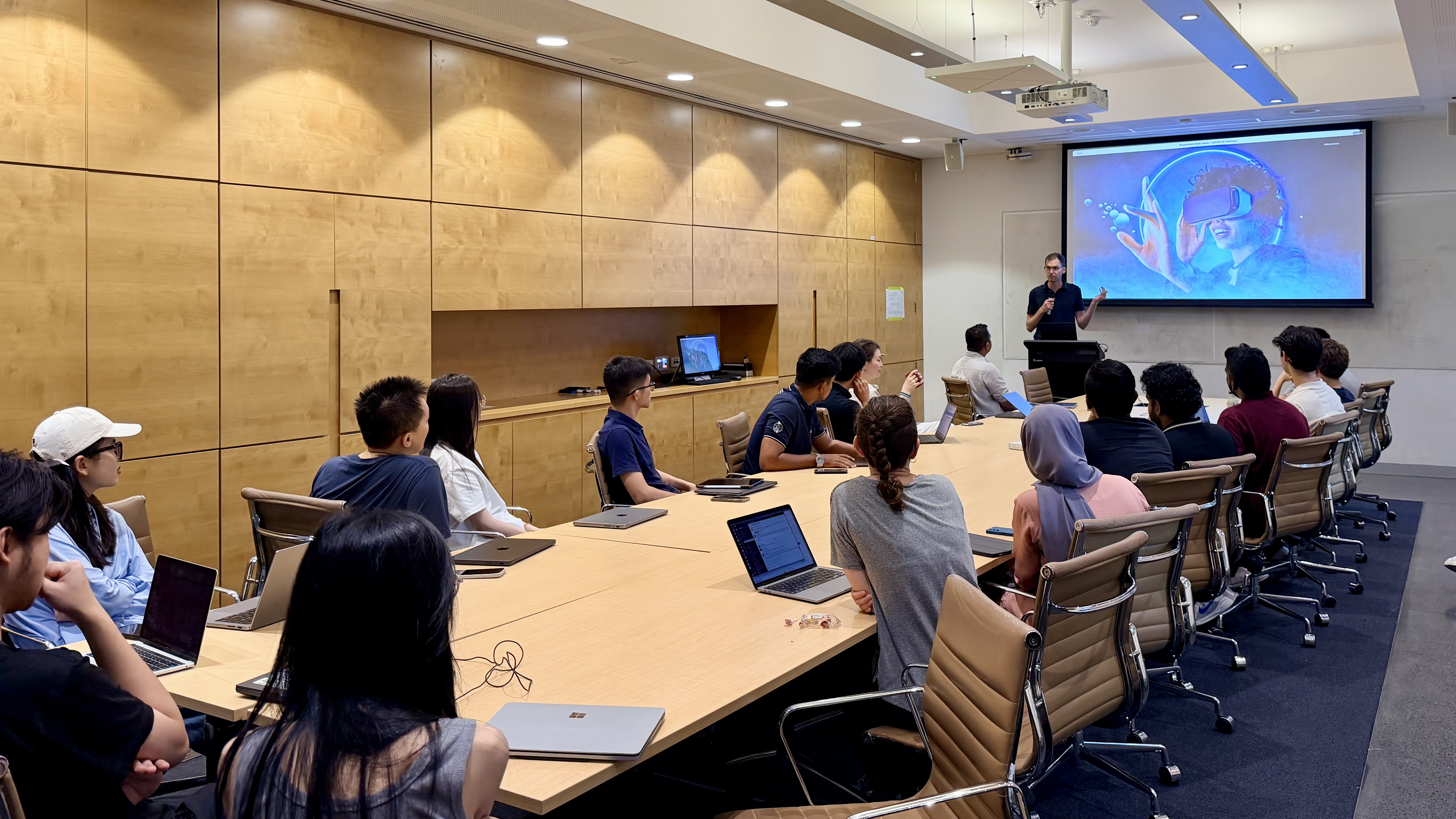
Special Research Seminar: Prof. Jürgen Steimle
On February 25, the aid-lab was honored to host Prof. Jürgen Steimle from Saarland University for a special research seminar titled "Feeling Across Realities: Body‑Based Interfaces for Expressive Mixed Reality."
Prof. Steimle, who directs the Human-Computer Interaction Lab at Saarland University, shared his vision for a new class of expressive, body-based interfaces that enrich Extended Reality (XR) with tactile, material, and emotional qualities.
Abstract: Feeling Across Realities
Augmented and Virtual Reality technologies now offer stunning photorealistic graphics and deeply immersive visual experiences. Yet, while the "seeing" in mixed reality has advanced dramatically, the "feeling" of the virtual environment and one's own actions remains constrained. This talk advocates for a new class of expressive, body‑based interfaces that enrich XR with tactile, material, and emotional qualities, bringing touch to the forefront of immersive interaction.
During the seminar, Prof. Steimle outlined three key areas of research:
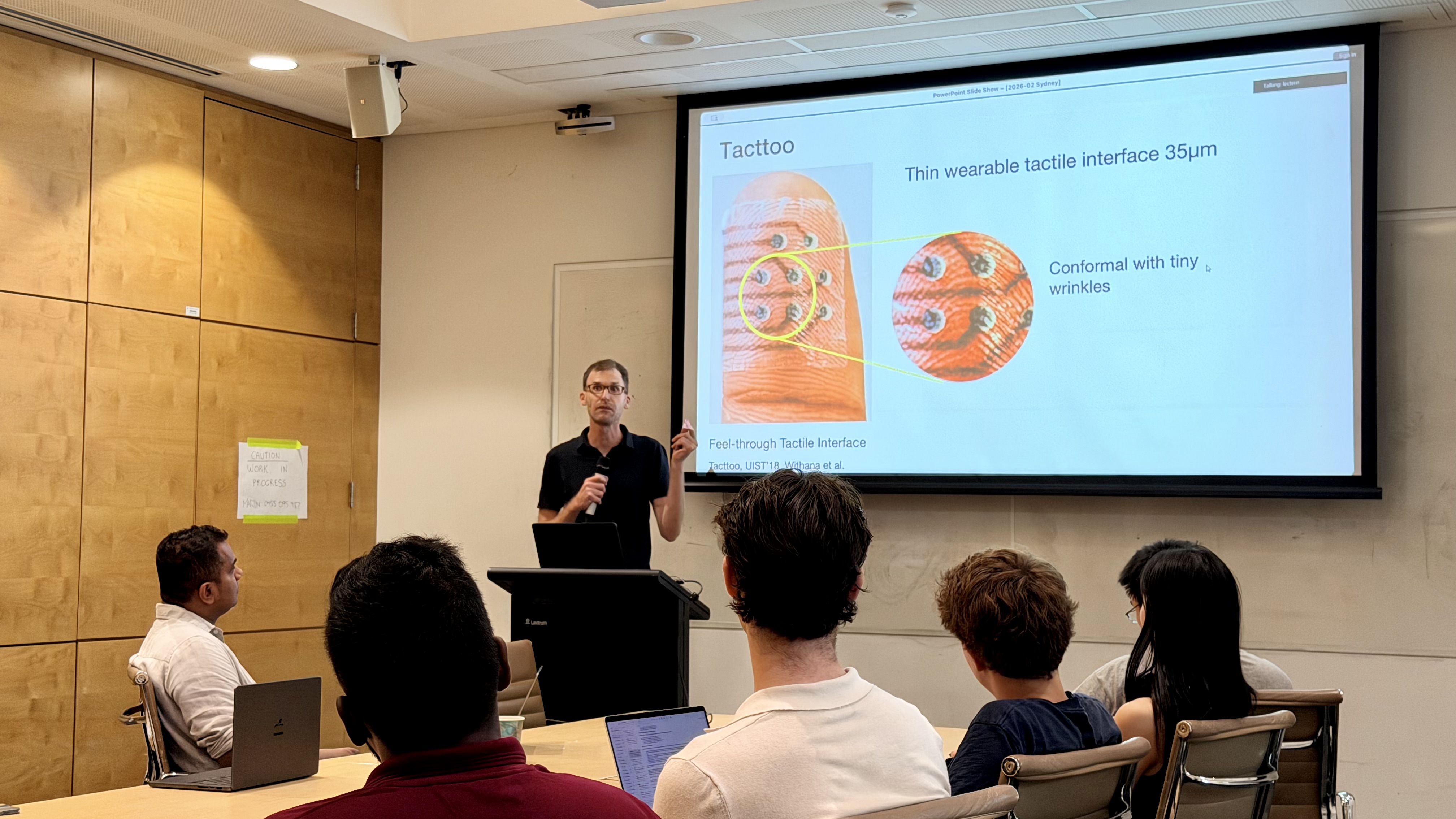
- Epidermal Devices: Ultra-thin and soft devices that deliver fine-grained tactile output for novel experiences in AR and VR.
- Tactile Illusions: Creating perceptually rich virtual materials through innovative haptic techniques.
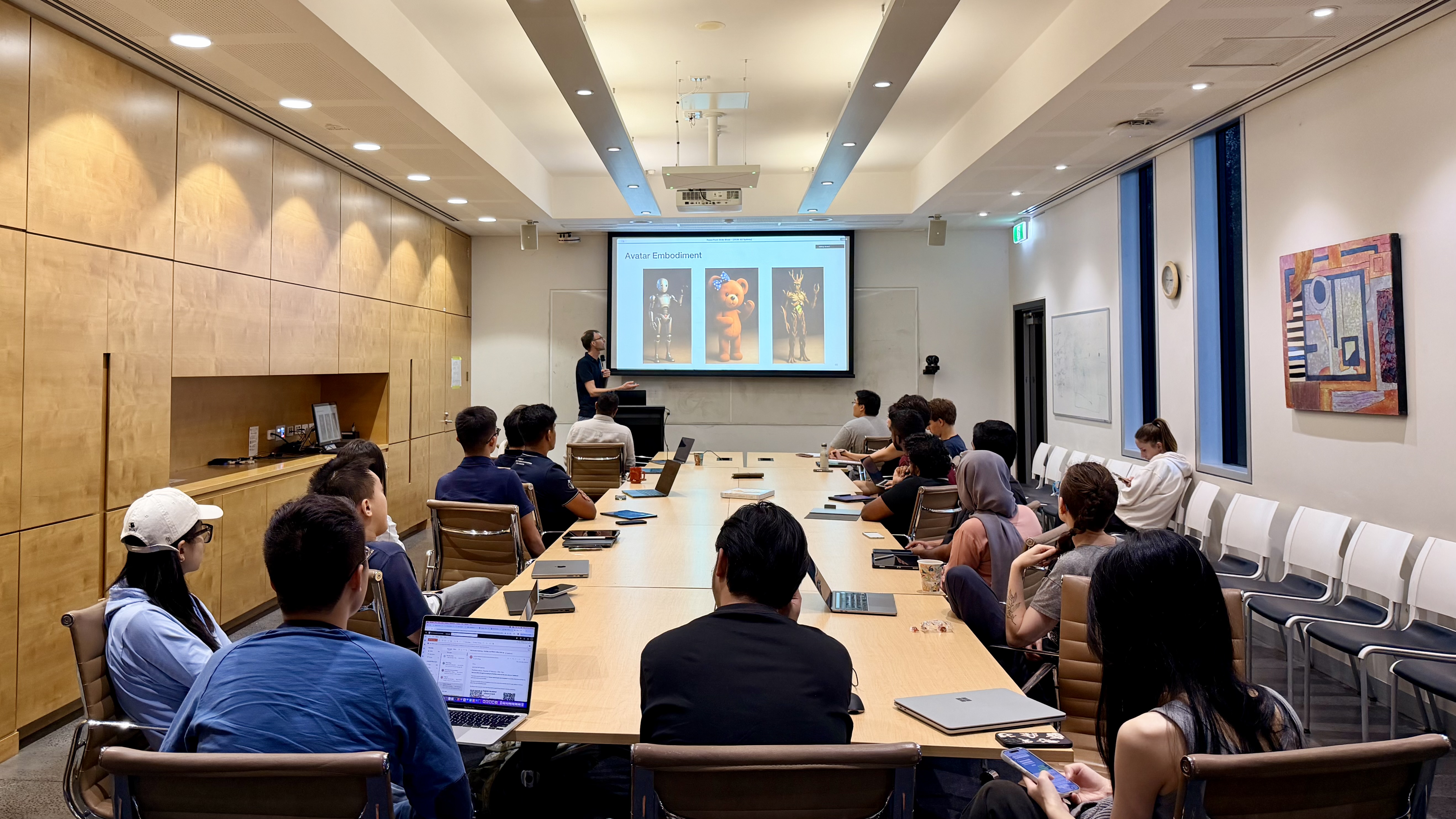
- Body Actuation: Enhancing avatar embodiment through real-time body actuation synchronized with the avatar.
The talk also touched upon how generative AI models can assist in designing expressive tactile feedback and orchestrating complex haptic experiences across dynamic mixed-reality environments.
About the Speaker
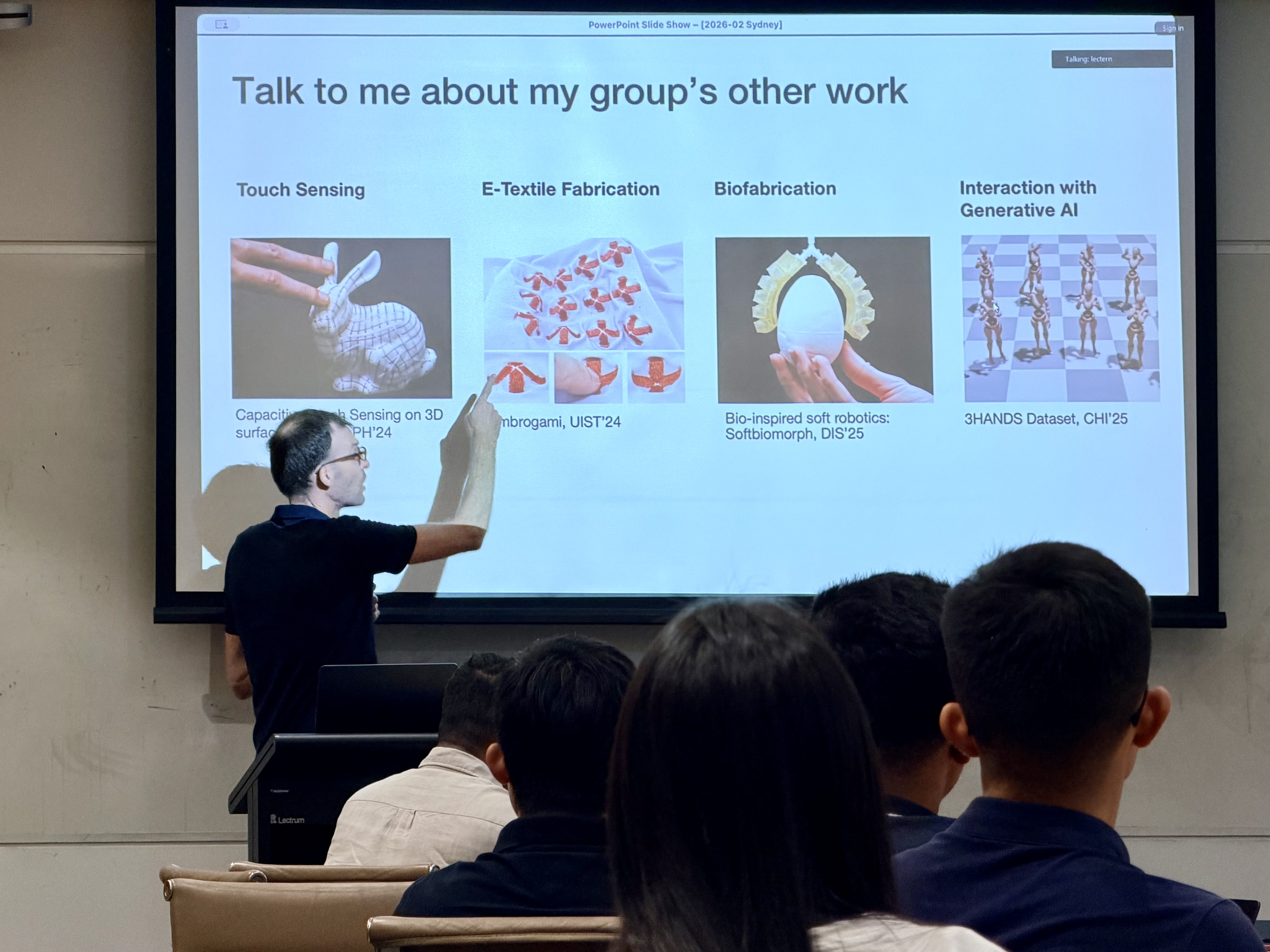
Jürgen Steimle is a full professor in the Department of Computer Science at Saarland University and a leading figure in the field of HCI. His work on touch and haptic interfaces, human-robot interaction, and digital fabrication has been recognized with numerous best paper awards at ACM CHI and UIST, as well as an ERC Starting Grant.
We would like to thank Prof. Steimle for visiting our lab and for his inspiring presentation that pointed toward a future in which virtual worlds are not only seen but deeply felt. For those who missed the talk, you can find more information about his research at the Saarland HCI Lab website.
Seminar Highlights